So, what is IT support, really? In its simplest form, it is the professional service that looks after your company's entire technology setup. But it's so much more than a helpline you call when a computer goes on the fritz. Think of it as a proactive partnership, one dedicated to making sure your systems are always running smoothly, securely, and efficiently—often fixing problems before you even know they exist.
What IT Support Really Means For Your Business

A great analogy is to see your IT support partner as the facilities manager for your digital workplace. Just as a building manager ensures the lights stay on and the doors are locked, your IT team handles everything from routine checks and software updates to high-stakes emergencies like a server crash or a cybersecurity threat.
This forward-thinking approach is what turns technology from a potential headache into a genuine business advantage. Instead of panicking when a critical system fails right before a deadline, you have a team constantly monitoring your network, spotting risks, and quietly resolving them in the background.
A Strategic Business Function
Modern IT support isn't just about fixing things; it's about aligning technology with your business goals. A true IT partner offers strategic advice on how technology can boost productivity, cut operational costs, and give you an edge over the competition.
For instance, a growing accountancy firm in Dorset might work with its IT partner to implement a secure cloud-based document management system. This would allow their team to access and collaborate on client files from any location, whilst still meeting strict GDPR data protection rules. That’s not just a technical fix—it’s a strategic move that boosts flexibility and builds client trust. The day-to-day work is vast, as you can see in our guide to IT support responsibilities.
An effective IT support strategy is not an expense but an investment in operational resilience. It ensures business continuity by safeguarding against data loss, security breaches, and costly downtime that can damage both revenue and reputation.
To give you a clearer picture, here's a breakdown of what a comprehensive IT partner actually does.
Core Functions of Modern IT Support
| Core Function | Business Impact |
|---|---|
| Proactive Monitoring | Identifies and resolves issues before they cause downtime, keeping your team productive. |
| Cybersecurity | Protects your sensitive data and systems from threats like malware, ransomware, and phishing. |
| Data Backup & Recovery | Ensures your business can get back on its feet quickly after a disaster, minimising data loss. |
| Network Management | Keeps your internet, Wi-Fi, and internal networks stable, fast, and reliable. |
| User & Helpdesk Support | Provides fast, expert assistance to employees so small tech issues don't become big problems. |
| Strategic IT Planning | Offers expert advice on technology investments to support long-term business growth. |
Each of these functions contributes to a stable and secure technology foundation, freeing up your team to focus on what they do best. At the heart of this is a well-run helpdesk, and it is worth understanding what service desk management entails to see how it all comes together.
The Shift from Reactive Fixes to Proactive Partnerships
The old way of handling IT support was pretty straightforward: something broke, you called someone to fix it. This is often called the 'break-fix' model, and it treats your technology a bit like a burst pipe – you only call for help once the damage is done and water is everywhere. For a business, this meant waiting for a server to crash or a crucial bit of software to fail, inevitably leading to chaos, downtime, and a surprisingly large, unplanned bill.
Imagine your sales team is having a record month, and suddenly your customer relationship management (CRM) system goes offline. With the break-fix approach, the clock starts ticking immediately. Every minute the system is down translates into lost sales, frustrated staff, and a real risk to your reputation. You're left making a frantic call, waiting for an engineer, and just hoping for a quick fix while the costs keep piling up.
This is where the whole idea of what IT support should be has completely turned on its head. The industry has moved on from just reacting to disasters to actively preventing them in the first place. Think of it as the difference between calling the fire brigade and installing smoke detectors and a sprinkler system. One is a panic-driven reaction; the other is a calm, strategic plan.
The Value of a Proactive Approach
A proactive IT partner works from a totally different playbook. They are constantly keeping an eye on your systems, searching for the small warning signs that often precede a major failure. This could be anything from a server's hard drive showing early signs of wear to unusual network activity that might suggest a security breach is underway.
Instead of waiting for that CRM system to crash, a proactive team would have likely spotted the failing hardware weeks in advance. They would have scheduled a replacement during a quiet weekend, swapping it out seamlessly with zero disruption to your business. This kind of strategic thinking turns your IT from an unpredictable, costly headache into a stable, reliable asset that helps you grow.
Proactive IT support isn't just about stopping things from breaking; it's about creating a technology environment that consistently and reliably helps you achieve your business goals. This stability drives growth, boosts productivity, and makes your IT spending predictable.
To help you see the difference more clearly, let us compare the two models side-by-side.
Reactive vs Proactive IT Support: A Comparison
The table below breaks down the fundamental differences between the traditional 'break-fix' model and a modern, proactive managed services approach. It highlights how each method impacts critical areas like cost, downtime, and overall business strategy.
| Feature | Reactive ('Break-Fix') Support | Proactive (Managed IT) Support |
|---|---|---|
| Cost Structure | Unpredictable, hourly rates & call-out fees. Can be very expensive for major issues. | Fixed, predictable monthly fee. Budgeting is simple and transparent. |
| Downtime | High. Problems are only addressed after they cause a system failure. | Minimal. Issues are often identified and resolved before they cause downtime. |
| Business Focus | Focused on fixing individual technical problems as they occur. | Focused on aligning technology with your long-term business goals and strategy. |
| Security | Reactive. You only discover a breach after the damage is done. | Proactive. Constant monitoring and preventative measures to stop threats. |
| Relationship | Transactional. The provider is just a vendor you call when something is broken. | Partnership. The provider acts as your trusted technology advisor. |
As you can see, the proactive model is designed to give you peace of mind and a solid foundation for growth, rather than just waiting for the next crisis.
From Unpredictable Costs to Strategic Investment
The data from the IT industry clearly shows this shift in thinking. While some companies still rely on reactive support, proactive managed services are growing fast as more business owners recognise the true cost of downtime. To see how these ideas apply to your specific needs, you can explore a complete guide on IT support for small businesses.
This change is being driven by the sheer complexity of modern business technology and the ever-present threat of cyberattacks. The market numbers tell the story: the proactive IT segment is projected to be the fastest-growing, with a 7.6% CAGR to 2030. This goes hand-in-hand with the growth in managed services, which have expanded by 12% annually for the last five years as businesses prioritise security and reliability.
Ultimately, moving to a proactive IT partnership means you are no longer just paying to put out fires. You are making a smart investment in business continuity, robust security, and the peace of mind that comes from knowing your technology is in the hands of experts dedicated to keeping you up and running.
A Closer Look at Core IT Support Services
To really understand what IT support is all about, we need to move past the old idea of just "fixing computers when they break." Modern IT support is a genuine partnership, built on a set of interconnected services designed to keep your business running smoothly, securely, and efficiently. Each service tackles a critical part of your operations, from day-to-day productivity to your ability to survive a major incident.
Let’s break down the essential services you should expect from a professional IT provider, looking at how they apply to businesses right here in Hampshire, Dorset, and the surrounding areas.
The philosophy behind IT support has fundamentally changed over the years. We have moved from a reactive, 'break-fix' model to a far more effective proactive strategy focused on prevention.
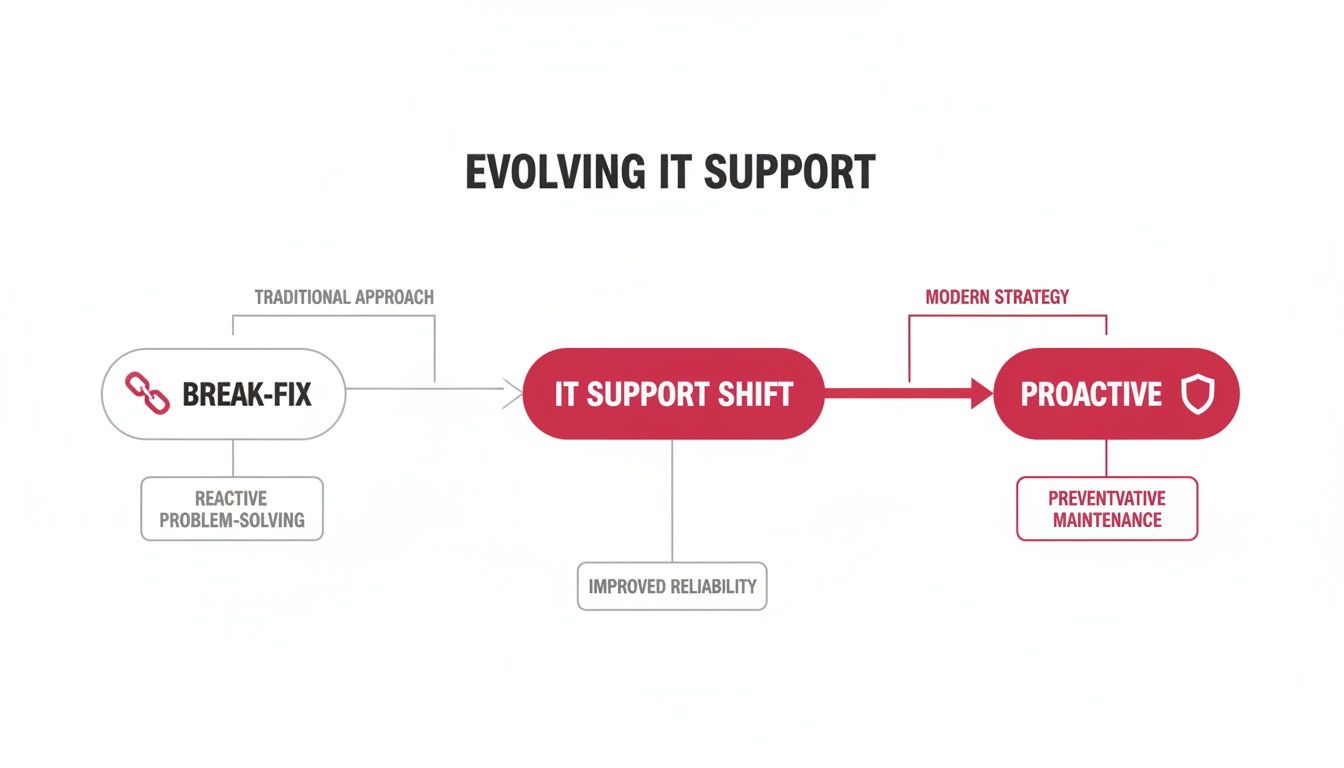
The crucial point here is that preventing problems before they happen is infinitely more valuable than just being good at cleaning up the mess they leave behind.
Managed Services and Proactive Monitoring
This is the very heart of modern, proactive support. Instead of waiting for a call to say a system is down, your provider uses specialised software to monitor the health and performance of your entire IT network 24/7. This covers everything from your main servers right down to individual laptops and network switches.
For example, a logistics company in Hampshire relies on its servers being operational around the clock. Proactive monitoring software can detect that a server's memory usage is consistently high, flagging a potential overload. An engineer can then analyse the issue and optimise performance before the server crashes during a critical dispatch period, preventing costly delays. If you want to dive deeper, have a look at our guide on managed IT services and support.
Cloud Services and Hosted Desktops
Cloud services give your business incredible flexibility and a serious security boost. At its core, this means moving your data and software from physical servers in your office to highly secure, UK-based data centres.
A fantastic practical example of this is the hosted desktop, sometimes called Desktop as a Service (DaaS). Your entire work computer—your files, software, and personal settings—lives in the cloud. An employee at a Somerset-based architectural practice could log in from home, a client's site, or anywhere with an internet connection and see their familiar work desktop, with secure access to complex design software and project files. It’s no surprise that in the UK, cloud and platform services command 28.15% of the IT services market as businesses embrace the performance and cost benefits.
Backup and Disaster Recovery
Ask yourself this: what would happen if your office had a fire, a flood, or a total server meltdown? A solid backup and disaster recovery plan is your business’s insurance policy for these exact scenarios. This is much more than just backing up your files; it’s about having a tested, rehearsed plan to get your entire operation back online, fast.
One of the most common mistakes we see is businesses assuming their backups are working without ever testing them. A proper disaster recovery service includes automated, regular backups and periodic test-restores to prove that, when you need it most, your data is complete and can actually be recovered.
For a legal practice in Dorset, this means every client file and case document is securely copied and stored off-site. If their local server is ever compromised, their IT partner can restore everything to a new system in a matter of hours, not days, protecting both business continuity and client confidentiality.
Cybersecurity and Compliance
In a world of constant digital threats, cybersecurity is not an optional extra—it is essential. This service is all about building a multi-layered defence to protect your business from malware, phishing scams, and devastating ransomware attacks. It involves a combination of firewalls, antivirus software, intelligent email filtering, and crucial ongoing training for your team.
For example, an independent financial advisory firm handling sensitive client data must adhere to strict FCA and GDPR regulations. A managed cybersecurity service provides 24/7 monitoring to spot and block suspicious activity. It implements email filtering that automatically quarantines a convincing but malicious invoice attachment, preventing a phishing attack that could lead to a full-scale data breach, saving the firm from massive fines and irreversible damage to its reputation.
The Real-World Business Benefits of Professional IT Support

It’s one thing to know what the services are, but what does professional IT support actually do for your business? We’re not just talking about fixing a printer or resetting a password. The real impact is on your bottom line, and a strategic IT partnership delivers a tangible return on investment by boosting efficiency, security, and growth.
At its heart, expert IT support is about giving you and your team their time back. Every minute an employee spends wrestling with a slow computer or a buggy piece of software is a minute they are not spending on their actual job. These small frustrations add up, becoming a major drain on productivity. Proactive support stops these problems before they start, letting your team focus on what they do best.
Increased Productivity and Operational Efficiency
When your technology just works, your team can fly. A professional IT partner doesn't just fix what is broken; they fine-tune your entire setup, from network speeds to application performance. The result is a work environment where technical roadblocks simply disappear.
Imagine a local manufacturing firm in Somerset. Their entire production line depends on specific software to manage orders and control machinery. If that system goes down, production grinds to a halt. Proper IT support ensures that critical software is always updated, patched, and running smoothly, directly tying the health of their technology to the company's profitability.
The true value of IT support is measured in uptime. Every hour your systems run smoothly when they might have otherwise failed is an hour you’re protecting revenue, hitting deadlines, and keeping your clients happy.
Enhanced Security and Risk Reduction
For any business in Dorset or Hampshire today, cyberattacks are a real and present danger. A single breach can cause devastating financial and reputational harm. Professional IT support is your first and best line of defence, implementing robust security measures to shield your valuable data.
This goes far beyond just installing antivirus software. It’s a complete strategy that includes:
- Advanced Firewalls: Think of this as a digital gatekeeper for your network, blocking malicious traffic before it can get inside.
- Proactive Threat Monitoring: Your systems are constantly scanned for suspicious activity, ready to shut down threats before they can do any damage.
- Secure Data Backups: If the worst happens, like a ransomware attack, you can be back up and running in no time—without ever paying a ransom.
By drastically cutting the risk of a security breach, you’re not just protecting your bank account. You’re maintaining compliance and safeguarding the trust you’ve worked so hard to build with your customers.
Predictable Costs and Access to Expertise
One of the biggest advantages for any business owner is moving away from surprise, high-cost repair bills to a simple, fixed monthly fee. This makes budgeting for your technology straightforward and predictable. No more nasty financial shocks.
On top of that, you get a whole team of specialists on your side without the massive overheads of hiring, training, and retaining in-house IT staff. Your partner brings deep knowledge in networking, cloud services, and cybersecurity—giving you access to enterprise-level expertise for a fraction of the cost.
How to Choose the Right IT Support Partner
Choosing an IT support partner is one of the most significant decisions you will make for your business. This isn't just about finding someone to fix things when they break; it is about bringing a strategic ally on board who will protect your operations and help you grow. Taking a measured approach to your selection process is the key to finding a provider that genuinely gets what you need.
The first place to look, beyond the sales pitch, is their Service Level Agreement (SLA). This is the contract that spells out the promises they’re making, defining exactly what you can expect. It should clearly state guaranteed response times for different problems—after all, a total system failure needs a much faster fix than a minor printer issue.
Evaluating Key Criteria
For businesses in Dorset, Somerset, or Wiltshire, a few factors are simply non-negotiable. A local presence is vital. While most support can be handled remotely these days, some crises demand an engineer on-site, and fast. You need a partner who can be in your office quickly when a server dies or a critical network switch goes down.
Next, have a close look at their experience. Do they have a proven track record with businesses like yours? The IT and compliance needs of a financial services firm are worlds away from those of a local manufacturing company. Do not be afraid to ask for case studies or testimonials from clients in your sector to see real proof of their expertise.
A great IT provider doesn't just sell you solutions; they ask smart questions about your business goals. They should be as interested in your five-year plan as they are in your current server setup, making sure their support can grow with you.
Looking for a True Partnership
Beyond the technical skills, you’re looking for a genuine partner. This means finding a team that communicates clearly, ditches the confusing jargon, and is genuinely invested in your success. Checking client reviews and asking for references is a great way to get a feel for their service culture and how reliable they really are. It’s also worth understanding their different ways of working. For example, some businesses find a co-managed approach, blending their in-house team with external experts, gives them the best of both worlds.
This is backed up by what we are seeing across the market. For mid-sized businesses, co-managed IT delivers 76% higher operational satisfaction. The fact that onshore delivery holds a massive 46.55% market share also shows how much businesses value local expertise and UK-hosted infrastructure for performance and data security.
To make the right choice, you need to understand what being a managed IT service provider truly means. A real partner works with you proactively, not just reacting when the alarm bells start ringing.
So, What's the Next Step for Your Business?
We have explored how modern IT support is so much more than just a helpline for when things go wrong. It’s a genuine investment in your business's future—bolstering your security, sharpening your efficiency, and clearing the path for growth. It’s about building a foundation of operational resilience.
But how does your own setup stack up? Take a moment to think about it.
Are you and your team constantly wrestling with the same old tech problems, watching valuable time tick away? Is your company data properly backed up, and when was the last time you actually tested you could restore it? When you read about the latest cyberattack in the news, do you feel confident your defences would hold up?
Be honest with your answers. If any of those questions give you pause, it’s a strong signal that it might be time to get some expert guidance.
Your technology should be a tool that helps you win, not a constant headache that holds you back. The right IT partnership makes sure your systems are safe, effective, and pulling in the same direction as your business goals.
The logical next step is a simple conversation. A professional can help you map out a clear plan, making sure every pound spent on technology not only solves a problem but also delivers a real return and sets you up for success.
Your IT Support Questions Answered
We get it. Deciding on the right IT support for your business brings up a lot of questions. Here are some of the most common ones we hear from business owners, with straightforward answers to help you see things clearly.
What’s the Real Cost of Business IT Support?
This really boils down to the type of support you choose. With the old-school 'break-fix' approach, you are essentially paying by the hour whenever something goes wrong. That might sound cheap, but costs can quickly spiral out of control during a crisis, making it a nightmare to budget for.
The modern alternative is a managed IT services plan. Here, you pay a predictable, flat monthly fee that covers everything from day-to-day help to constant, proactive monitoring. This approach focuses on preventing problems before they start, which almost always works out to be a better long-term investment by avoiding costly downtime.
Is My Business Too Small for This?
Definitely not. In fact, it is often the smaller businesses that need professional support the most. Cybercriminals frequently target them, thinking they are an easy win with weaker security. Without an expert team in your corner, a single ransomware attack or data breach could be devastating.
Professional IT services are built for the unique needs and budgets of small and medium-sized businesses. They give you access to the kind of high-level security, data protection, and expertise that was once only available to large corporations, effectively protecting your business from some very serious threats.
It is a common myth that only big companies need professional IT. The truth is, managed services give smaller businesses the tools to compete, providing the kind of security and stability that lets them grow with confidence.
Will I Have to Deal With a Messy Handover If I Switch?
A good IT partner makes the switch seamless. A chaotic handover is a huge red flag; a smooth, organised transition is the hallmark of a provider who knows what they are doing.
The process should always start with a deep dive into your current setup, so they understand exactly how your business operates. From there, they will create a carefully phased migration plan to move everything over without causing disruption. Honest, clear communication throughout the whole process is vital, ensuring your team is supported and your business keeps running without a hitch.
Ready to build a more resilient and efficient business? For over 30 years, SES Computers has been the trusted IT partner for businesses across Dorset, Somerset, Wiltshire, and Hampshire. Contact us for a no-obligation consultation today.