When it comes to the benefits of VoIP for businesses, three things stand out immediately: a dramatic drop in costs, incredible flexibility for modern work, and a suite of advanced features that old-school phone lines just can't touch. This isn't just a simple update; it's a strategic move that prepares your communications for the future, getting you away from landline technology that's heading for the history books.
Why Modern Businesses Are Switching To VoIP
Let's be blunt: your traditional business phone system is living on borrowed time. Think of it like a dusty DVD collection. It might still work, but it’s clumsy, limited, and being rapidly overtaken by something far more efficient and flexible. VoIP, or Voice over Internet Protocol, is the streaming service equivalent for business communications. Making the switch isn't just an option anymore—it's a strategic necessity.
With the UK's nationwide PSTN switch-off set to complete in 2025, holding onto outdated landlines is no longer a viable plan. This national infrastructure upgrade provides the perfect moment for professional services firms across Dorset, Somerset, and Wiltshire to modernise how they operate. Migrating to VoIP is about more than just swapping out old handsets; it's about securing a real competitive advantage. To get a handle on why, it helps to understand the fundamentals of What Is VoIP Technology.
A Strategic Upgrade, Not A Forced Update
It's crucial to see this change as a proactive, strategic upgrade. The move to VoIP delivers immediate, tangible improvements that are perfectly aligned with today's flexible ways of working. Businesses that take the leap quickly discover the benefits.
- Significant Cost Savings: Say goodbye to expensive line rentals. You can also slash your call charges, particularly for any international calls you need to make. A law firm in Dorset, for instance, can consult with an overseas client without worrying about exorbitant per-minute rates.
- Enhanced Flexibility: Your team can work from anywhere. A chartered surveyor can take a client call on their business number from a construction site using a mobile app, keeping them connected no matter their location.
- Superior Client Communication: You gain access to powerful tools like auto-attendants and call recording, which directly boost both client experience and your own operational efficiency.
The PSTN switch-off is simply speeding up a transition that was already well underway. Market analysis consistently shows that small businesses can see cost reductions of 70–80%, while medium-sized enterprises often report 50–75% savings by shifting to internet-based calling.
For local firms, this shift brings greater resilience and helps project a more professional, modern image. By adopting a communication platform built for today's world, you align your business with the agility and efficiency that clients have come to expect. You can learn more about the specifics in our guide on what VoIP technology is.
How VoIP Delivers Significant Cost Savings
When business owners first look into VoIP, the most compelling benefit is almost always the immediate and dramatic reduction in costs. We’re not talking about shaving a few pounds off the monthly bill; this is a completely different way of handling your business calls that leads to serious, measurable savings.
Think about your current phone bill. It’s likely a confusing jumble of fixed line rental charges, call packages, and other fees that are difficult to predict or control. The biggest offender is usually the old-fashioned analogue line rental – a hefty fixed cost you pay every month just to have a dial tone. VoIP gets rid of this entirely by running your calls over the internet connection you're already paying for.
Eliminating Outdated Expenses
Beyond simply ditching the line rental, VoIP helps you shed other expensive relics of the past. Those bulky on-premise PBX (Private Branch Exchange) systems, often tucked away in a server cupboard, come with a hefty price tag for purchase, installation, and ongoing maintenance. Any time you need an update or a fix, it means calling in a specialised technician and getting another invoice.
A modern cloud-based VoIP system, like a 3CX solution from SES Computers, makes that on-site hardware completely redundant. The entire phone system is hosted securely in a UK data centre, which means you're no longer responsible for its upkeep, security, or upgrades. This move alone can save a business thousands in upfront capital and recurring maintenance contracts.
Slashing Call Charges
The savings don't stop there. With VoIP, any calls made between users on your system are typically free, even if one person is in the Dorset office and another is working from home in London. When it comes to calling external numbers, the rates are substantially lower than traditional landline tariffs.
This is especially true for international calls. An architectural practice collaborating with partners in Europe or the US, for example, can see their international call costs fall by as much as 90%, turning what was once a major overhead into a minor operational expense.
To put it into perspective, here's a side-by-side comparison illustrating the typical monthly savings for a 10-employee professional services firm after making the switch.
Comparing Monthly Costs: Traditional Phone System vs VoIP
| Expense Category | Traditional PSTN System (Monthly) | VoIP System (Monthly) |
|---|---|---|
| Line Rentals (5 lines @ £20/each) | £100 | £0 |
| PBX Maintenance Contract | £75 | £0 |
| Call Package (local/national) | £80 | £40 |
| International Calls (estimate) | £50 | £5 |
| Total Monthly Cost | £305 | £45 |
As you can see, the savings are substantial. The traditional system racks up over £300 a month in fixed and variable costs, while the VoIP system handles the same workload for under £50—a saving of over 85%.
This infographic highlights the typical savings UK businesses are experiencing right now.
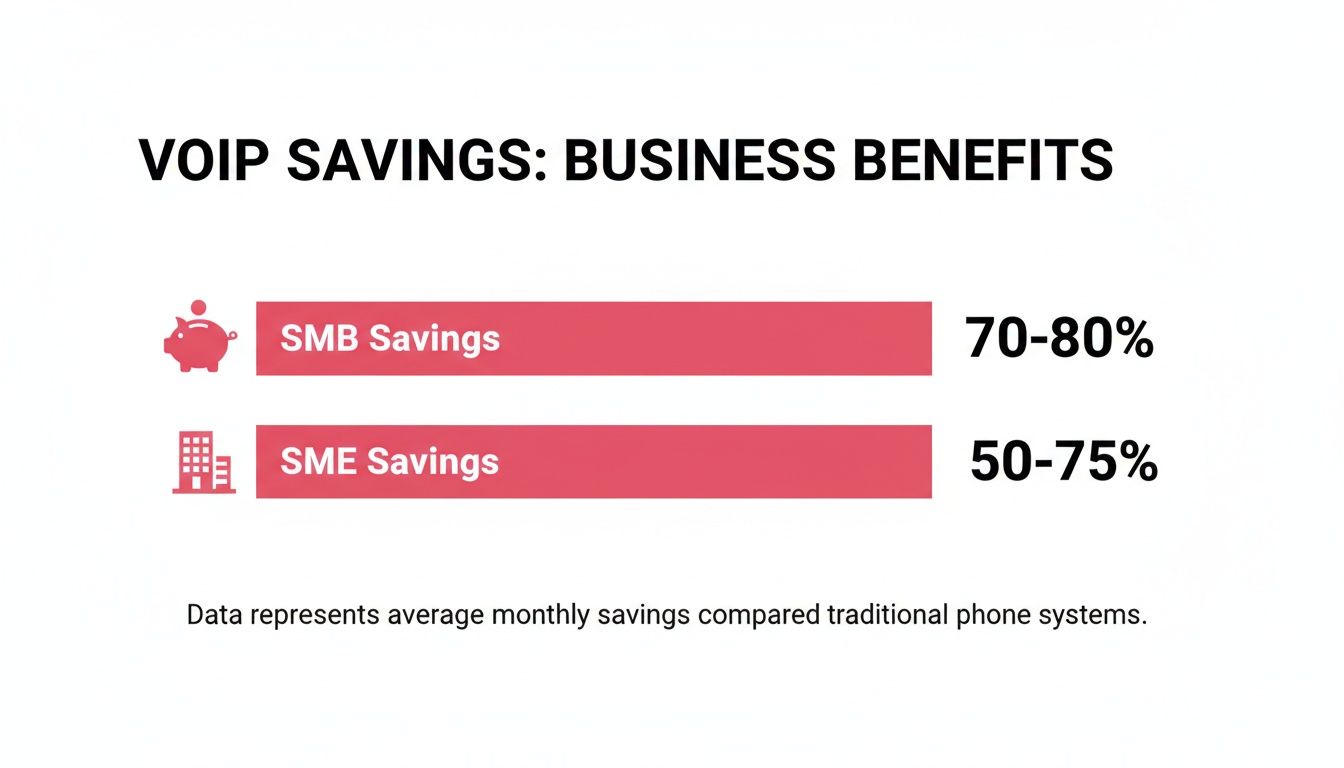
The numbers speak for themselves. Both small and medium-sized businesses consistently achieve huge cost reductions, making the financial argument for switching to VoIP incredibly strong.
Empowering A Flexible And Hybrid Workforce
Let's be honest, the days of everyone being tied to a single office location are fading fast. One of the most powerful advantages of a modern VoIP system is how effortlessly it supports remote and hybrid teams—something we see as essential for our professional services clients across Hampshire and the South West. This technology fundamentally untethers your team from their desks, turning any location with an internet connection into a fully operational workspace.
How does it do this? It's all down to a smart suite of features built for flexibility. Your staff can use softphone applications on their laptops or dedicated apps on their mobiles, effectively turning their personal devices into secure extensions of your main office phone system. This means your business maintains a professional and consistent image, no matter where your team happens to be working that day.

Unifying Your Dispersed Team
A good VoIP system hands you the tools to make distributed working genuinely efficient. These aren't just bells and whistles; they are practical features that ensure client communication remains seamless and professional, regardless of your staff's physical location.
- Find Me/Follow Me: Think of this as intelligent call routing. For an estate agent who is frequently out at viewings, it can automatically forward an incoming call from the office phone to their mobile after two rings. It ensures a critical call always finds the right person.
- Presence Status: A quick glance tells you who is available, busy on a call, or away from their desk in real-time. It sounds simple, but this feature dramatically cuts down on internal phone tag and wasted time when trying to collaborate on a client project.
- One Business Number: A solicitor working from home can make and receive calls about a sensitive case on their mobile, but the client only ever sees the main office number. This is brilliant for protecting personal privacy while upholding the firm's professional identity.
For any business with an eye on growth, VoIP provides incredible agility. You no longer need an engineer to visit the site and install a new line just to onboard a new starter. Instead, adding a new user to the system takes just a few clicks, and they're ready to work from anywhere.
Scaling With Modern Demands
This kind of built-in flexibility is perfectly suited to the modern business world. Just as VoIP empowers your remote and hybrid teams, complementary office trends can further enhance the hybrid work environment and boost employee wellbeing. The ability to scale your communications up or down as needed also aligns perfectly with other scalable solutions, like the hosted desktops we provide at SES Computers, creating a cohesive strategy for efficiency.
The market data backs this up. The UK VoIP market's rapid expansion is a huge opportunity for SMEs, with growth projected to hit USD 5.3 billion between 2025 and 2029, largely driven by the boom in mobile computing. This agility isn't just a nice-to-have; it's a competitive necessity, a topic we explore further in our guide to IT solutions for remote working.
More Than Just a Phone: Advanced Features That Drive Real Productivity
A modern VoIP system isn’t just a new way to make calls; it's a completely different tool for your business. It’s a communication hub loaded with features that actively help your team get more done. Many of these capabilities used to be expensive, complicated add-ons for old-school PBX systems, but now they come as standard, ready to improve how you work from day one.
These tools work in concert to handle routine tasks, simplify workflows, and give every client a polished, professional impression of your business. Instead of juggling calls manually, the system intelligently manages your communications, freeing up your team to focus on what really matters.
Automate How You Greet Your Clients
One of the first productivity boosts you'll notice is how VoIP can automate your incoming calls. The auto-attendant (or digital receptionist) is like having a smart front door for your company. It greets every caller with a professional, pre-recorded message and gives them a simple menu to get them where they need to go.
For a busy accountancy firm in Wiltshire, this is invaluable. They could set up their auto-attendant to route calls in a heartbeat:
- "Press one for Payroll."
- "Press two for Tax and VAT enquiries."
- "Press three for our Company Secretarial team."
This simple change means callers reach the right person straight away, with no need for a receptionist to transfer every single call by hand. It cuts down wait times, makes for a better client experience, and lets your admin staff get on with other jobs.
Work Smarter, Not Harder
Beyond simply directing calls, VoIP systems are packed with tools designed to make day-to-day work far more efficient. They help your team manage their time better and ensure no important details fall through the cracks. For any professional services firm, this is gold.
The real power of VoIP is its ability to turn conversations into structured, usable information. Voicemails become searchable text. Phone calls become auditable records. It adds a level of efficiency and compliance that used to be out of reach for most small businesses.
Take a look at these features, which come built into modern 3CX telephony solutions from SES Computers:
Voicemail-to-Email Transcription: This is a game-changer. The system automatically turns a voicemail into text and emails it straight to your inbox. No more dialling in to check messages. Your team can read them, prioritise callbacks, and even search their email for a specific detail from a past call.
Call Recording: Essential for training, quality control, and compliance. For a financial advisor, having a secure, searchable record of client conversations is a crucial part of meeting regulatory duties. It’s also a fantastic resource for coaching new team members on how to speak with clients.
Put together, these features aren’t just small upgrades—they represent a fundamental shift in how your business communicates, making it one of the clearest benefits of moving to VoIP.
Strengthening Your Business Continuity And Resilience
What happens if a power cut hits the office? Or a local flood makes the building inaccessible? For any business still tethered to a traditional phone system, the answer is usually grim: communications grind to a halt and you start missing crucial client calls. This is where one of the most powerful voip business benefits comes into play—building genuine operational resilience.
With a modern, cloud-based VoIP system, your communications are no longer physically tied to your premises. The system's 'brain' is hosted in a secure UK data centre, entirely separate from your office. This means it stays fully operational even if your building is completely out of action.
Maintaining Communication During Disruptions
The real magic is in the intelligent call handling. You can create pre-set rules that automatically kick in the moment an outage occurs, ensuring you never lose contact with your clients. This proactive approach turns a potential crisis into a minor hiccup.
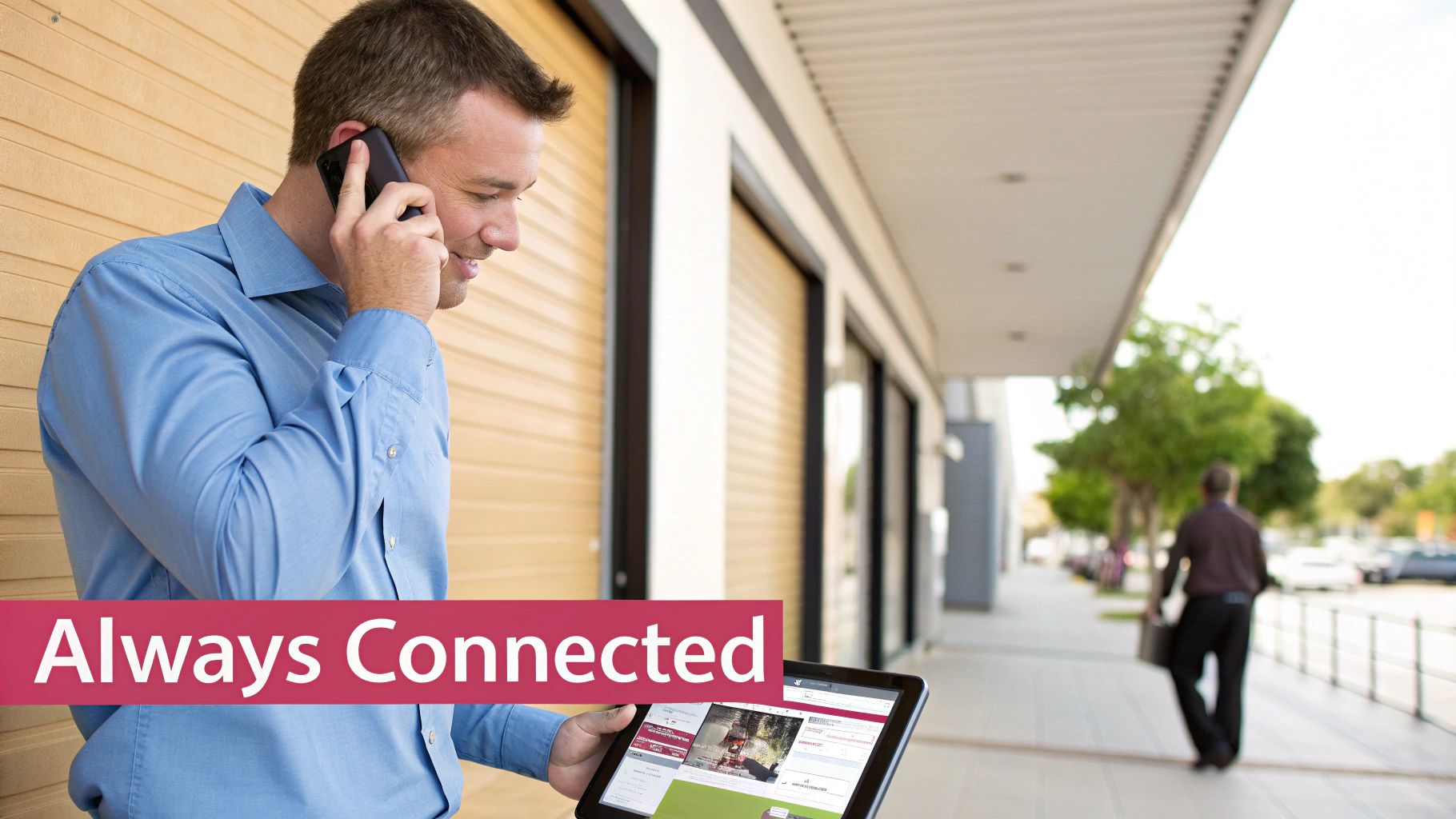
Imagine a recruitment agency in Somerset whose primary broadband connection suddenly drops. Instead of calls ringing out unanswered, a pre-configured rule instantly forwards all incoming calls to the consultants' mobiles. For the client, it's business as usual; they get the same professional service they always do.
VoIP acts as a powerful safety net for your communications. By moving your phone system to the cloud, you are effectively decoupling your ability to talk to clients from the physical vulnerabilities of your office location.
A Core Pillar Of Your Business Strategy
This built-in resilience makes a modern phone system a fundamental part of any robust continuity plan. It ensures your team can keep working and your clients can always reach you, no matter what happens on-site. The key capabilities include:
- Automatic Call Rerouting: Instantly divert calls to mobile phones, another office, or staff working from home.
- Location Independence: Because the system lives in the cloud, your team can log in and work from anywhere with an internet connection, bypassing local issues entirely.
- Proactive Failsafes: Set up your disaster recovery rules in advance. The system will react instantly, with no need for manual intervention during an emergency.
Ultimately, this aligns perfectly with our mission at SES Computers to minimise client downtime and protect their operations. By preparing for the unexpected, you strengthen the very foundations of your company. If you're looking to build a more resilient operation, you can learn more about our comprehensive business continuity services.
Your Guide to a Smooth Switch to VoIP
Moving your business phone system over to VoIP might sound like a huge undertaking, but it doesn't have to be. With a bit of planning, the whole process can be surprisingly straightforward. For business owners here in the South West, breaking it down into a few clear stages takes the stress out of it and ensures you get it right without causing chaos in your daily operations.
Interestingly, the first step has nothing to do with phones. It’s all about your internet connection. A VoIP system uses your broadband to make and receive calls, so we need to be absolutely sure it's up to the job. This means checking your bandwidth to confirm it can handle all your calls on top of your team's regular internet activity.
It's a common mistake to underestimate how much bandwidth you'll need, and that's what leads to jittery, poor-quality calls. Working with a local expert like SES Computers means we can carry out a proper network assessment first, spotting any potential weak points before they ever become a problem.
Your Practical Migration Checklist
Once we've given your network a clean bill of health, we can get started on the migration itself. Taking a structured approach is the secret to avoiding any downtime and making sure your team feels comfortable with the new system from the moment it goes live.
Here are the key steps we'll walk through for a seamless switch:
- Porting Your Existing Numbers: This is probably the most important part for any business. The porting process simply means we transfer your current phone numbers over to the new VoIP service. When it's handled properly, there is zero downtime. Your customers won't even notice a change has happened.
- Choosing Your Hardware (Or Software): You've got choices here. You can go for modern IP desk phones with all their handy features, or you could give your team more flexibility with softphones. These are just apps that turn a laptop or mobile phone into a full business extension. Most businesses we work with end up using a mix of both.
- Configuring Your Call Flows: This is where we tailor the system to how you actually work. We’ll set up your auto-attendant (the "press 1 for sales" menu), create rules for routing calls to the right people, and configure how you want to receive voicemails.
- Training Your Team: Never skip this step! Good training is what makes the difference. We’ll make sure everyone knows how to use the new features, from transferring a call to getting voicemails sent straight to their email inbox. It’s the best way to make sure you get a real return on your investment.
A successful transition is less about the technology itself and more about the quality of the planning and support behind it. The goal is to make the switch feel like a natural upgrade, not a disruptive change.
By following this simple checklist, the whole process becomes much clearer and sets your business up for a win. Partnering with an experienced local provider like SES Computers means you have an expert managing every detail, from the first chat to ongoing support, guaranteeing a smooth move to a better phone system.
Frequently Asked Questions About VoIP
As local business owners across Dorset and Somerset look into upgrading their communications, the same handful of questions always pop up. Getting straight answers to these is the key to seeing just how beneficial a modern phone system can be and making a decision you feel good about.
We’ve put together the most common queries we hear from professional services firms, with clear, no-nonsense answers to help you plan your move.
Will The Call Quality Be As Good As My Landline?
It's actually better. Modern VoIP systems often deliver a much crisper, clearer sound than old copper wires ever could. With a stable, high-speed internet connection, you get High-Definition (HD) voice quality that’s a world away from the crackles and fuzz of traditional analogue lines.
The secret lies in a properly configured network that prioritises your voice traffic. This simple step stops other internet activity, like someone downloading a large file, from interfering with your calls. Any professional installation should include this network tuning as standard practice, guaranteeing your calls are always crystal clear.
Can I Keep My Existing Business Phone Number?
Yes, absolutely. The process is called 'number porting', and it’s a standard, seamless procedure that lets you bring your established phone number over to the new VoIP service. For maintaining business continuity, this is non-negotiable.
A good provider will handle the entire porting process for you. They’ll work behind the scenes to ensure there’s no downtime, so your clients can keep calling the number they’ve known for years without any disruption to your business.
Being able to keep your number is one of the biggest wins of switching to VoIP. You get to completely overhaul your communications technology without confusing customers or having to reprint all your marketing materials.
What Happens If My Office Internet Goes Down?
This is where a professionally managed VoIP system really proves its worth. From day one, we set up automatic 'failover' rules. Should your main office internet connection drop, all your incoming calls are instantly rerouted to designated mobile numbers or a backup line.
It all happens automatically, so you literally never miss a client's call, even during a total outage. For any professional service in Wiltshire or Hampshire, this kind of built-in continuity isn't just a nice feature—it’s an essential safety net for your operations.
Ready to unlock these benefits for your business? The team at SES Computers has been helping local firms across the South West make a smooth, successful transition to VoIP for years. Contact us today for a no-obligation consultation.